• It usually does not take long to sense when certain people have wisdom, but when are you able to actually feel a person’s wisdom? One can feel Ambassador Ebrahim Rasool’s wisdom.

    During our conversation over lunch on Wednesday, Ambassador Rasool stressed the importance of South Africa exporting the principle of Ubuntu – I am because you are. Our focus on meeting with technology companies in South Africa is a perfect opportunity to glean this philosophy and take it back to Atlanta.

    Ambassador Rasool also highlighted the opportunity for African Americans and South Africans to move past a shared struggle to a shared opportunity. This is critical. The challenges that Africans and African Americans have faced are real and the conversation should continue. What is so exciting is that there are opportunities in the US and on the African continent to take a hold of those challenges and steer them towards a new narrative of global commerce, social engineering, and artistic exposure.

    I don’t have much more to say than that my pursuit of wisdom continues. Reading the book of Proverbs has new meaning these days as I move further into the economic development space. It is critical that I remain hyper focused on driving equitable solutions both here in the US and in African countries. One could argue that a solution that is not equitable is not actually a solution. Ubuntu.

    Pictures from Lunch with Ambassador Rasool

  • Sydney Musonda with his first batch of chickens

    Never have I been so excited about chickens! Earlier this year in Uganda, I and Sydney Musonda developed a business model for a chicken farm he would run in Zambia. He spent the next five months pursuing financing for his venture and secured funding in November. To date, he has purchased 205 day-old chicks and secured a facility to house them. He will be ready to make his first sales at the end of January.

    Sydney and I recently caught up on his venture and our conversation reinforced two things concerning entrepreneurship. The first is that the external environment, both political and macroeconomic, will always make things challenging for entrepreneurs. The second is that entrepreneurs can leverage these kinds of challenges to grow their confidence, brand, and business model.

    During the five months Sydney spent pursuing funding, he had a difficult time getting potential investors to buy into his idea. He got a significant amount of great feedback on his model, yet the investors he approached were having difficulty with their finances and were concerned about the political environment in Zambia at the time, it being an election year.

    Zambia is one of the better performing economies on the African continent, with its current $16.19 billion GDP projected to grow at an average rate of 6.9 percent between now and 2015, though the country is still trying to make sure that growth is inclusive. Like most of the world though, the economic crisis in the European Union is surely having an impact Zambia’s economy as well.

    The country seems to have transitioned well to President Michael Sata’s administration and Patriotic Front party after President Rupiah Banda’s three-year term and the Movement for Multi-Party Democracy’s 20-year control of power. In the months leading up to the election, there was tension on the ground. Sydney shared that one of the banks was taken over by the Zambian government showing that their concern was not completely unfounded.

    Despite the challenges he faced, Sydney says that his confidence continued to grow pitch after pitch. He was able to glean advice from the investors he approached and found the feedback helpful in refining his model. In the face of his disappointments, he did not give up and finally secured his funding.

    Sydney is launching his business at what seems to be a promising period in Zambia’s poultry industry. Mathews Ngosa, President of Poultry Association of Zambia, noted that Zambia’s poultry industry closed at 2011, having produced 40 million broiler chickens and 2.1 million layers. He projects production growth to land between 20-25 percent, a marked difference from the 40 percent reduction in growth the country experienced in 2009, and an increase from the 17.5 percent growth in 2010.

    I look forward to watching Sydney grow his business. The energy in his voice was so infectious as we spoke, and I am really excited that he has progressed this far with his venture. I am sure he will face further challenges considering that his venture is still young but I think his tenacity will help him drive the business forward.

  • No. 20: African Countries Drive Geothermal Development Amid US-China Brinksmanship
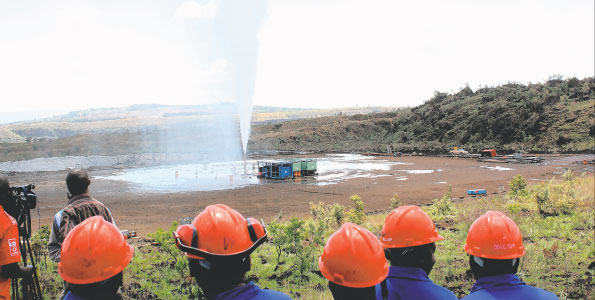
    A geothermal well at the Menengai crater. Credit: Suleiman Mbatiah

    United Nations climate talks end today in South Africa and the United States and China are playing chicken on who will take the lead in stewarding the environment well while also driving economic development. Quietly, Kenya has signed major deals just this year that will see the opening of at least three plants that will grow Kenya’s geothermal capacity to 514 megawatts (MW) by 2014. By 2030, Kenya aims for geothermal energy to make up 5000 MW of the total 15,000 MW of power the country will produce to meet growing demand – an estimated $16 billion investment. Imagine that, an African country driving the uptake of clean and renewable energy.

    Experts estimate that Kenya has the potential to generate 7,000 MW to 10,000 MW. The country began developing geothermal in the 1980s and currently produces about 209 MW. In 2008, the country set its geothermal power goal in the Vision 2030 strategic plan. Since that time Kenya has aggressively grown geothermal with the 36 MW expansion of the 48 MW Olkaria III, the construction of the 280 MW Olkaria IV, and the drilling of the 1,600 MW Menengai field.

    Contrary to what the Wall Street Journal reported on December 6, Kenya is not the only African country developing geothermal energy. Kenya lies within the East African Rift System that runs 6,500km from Tunisia to Mozambique. In a recent conversation with Dr. Meseret Zemedkun of the United Nations Environment Program (UNEP), she explained that some countries in the East African region are looking to complement their current hydropower capacity, while others like Eritrea and Djibouti are looking for primary renewable energy sources. Ethiopia has drilled a pilot 7 MW plant. Eritrea is conducting detailed exploration. Djibouti is drilling wells, and Uganda and Rwanda are conducting semi-detailed and detailed exploration.

    According to Dr. Zemedkun, “[African] countries are very keen to develop their resources.” She cited the high availability rate of geothermal compared to hydropower – 90-95 percent versus 50-55 percent. Changes in weather impact the availability of hydropower whereas geothermal energy is not impacted by changes in weather. Furthermore, enhanced technology is reducing the unit price of geothermal energy, increasing its accessibility to African countries.

    Dr. Zemedkun is currently driving the African Rift Geothermal Project, an initiative that brings together several African countries in working to build their geothermal capacity. It also helps reduce the risks of exploration through exploration studies, site selection, and surface exploration. UNEP partners with the World Bank in this work, leveraging its risk mitigation fund to further the exploration of geothermal energy.

    I am excited about the work Kenya is doing to develop its geothermal energy capacity. Its leadership has also kickstarted the exploration of geothermal energy in other countries along the East African Rift System. Hopefully, the US and China will figure out a way to do their part and contribute to the preservation of this earth while meeting the economic needs of their citizens.

  • No. 19: Entrepreneurship and Venture Capital: Brazil v. African Countries

    Entrepreneurs across the African continent are developing highly innovative technologies that are meeting real needs and improving the ease of life for people from all walks of life. At this year’s MIT Venture Capital (VC) Conference, I sat in on a panel that covered Brazil’s VC space. Two things struck me as very different from how entrepreneurship is developing on the African continent and present a case for investors to pay more attention to entrepreneurship in Africa.

    I was surprised to learn that Brazil’s entrepreneurs are more active in meeting the needs of the middle class by providing some of the technologies already available in the US like Groupon copycat, Peixe Urbano. In a year and a half, the company has expanded from Brazil to Argentina, Chile, and Mexico. Another Brazilian company, Vostu, is locked in lawsuits with Zynga which is arguing that the company is committing copyright infringement of its games including Farmville, a Facebook favorite.

    In Africa, we are not seeing a lot of “copycat” or “geographic innovation” technologies as one of the panelists preferred to call them. We are seeing technologies like Paga in Nigeria that enables mobile bankers to use any bank they choose. We see Sproxil, a company that has developed technology which uses text messaging to confirm that the drugs you are taking are not counterfeit. These creative innovations are exciting developments and ones that increase the fundability of entrepreneurs across the continent from investors both inside and outside the Africa

    The second observation that struck me was the presence of VCs encouraging entrepreneurs to try new things in bringing various technologies to Brazil – providing entrepreneurs with mentorship that can help them increase their success rates in the country. Earlier this year, Ndubuisi Ekekwe, an entrepreneur and scholar wrote a nice article on African entrepreneurs’ need for nurturing. Mentoring fell under this bucket. As entrepreneurs learn from the mistakes of their mentors to avoid those same pitfalls, stronger products enter the market. I am extremely happy for Tayo Oviosu, CEO of Paga and the access he has to a mentor like Tim Draper. I think we will see more mentorship as time elapses but the involvement of Brazil VCs in the growth of their companies bolstered my understanding of the importance of mentoring.

    Two takeaways came from the panel – the African entrepreneurial market is more disruptive than the current Brazilian entrepreneurial market, while more African entrepreneurs are going it alone as Brazilian entrepreneurs more readily have access to mentorship. Both are interesting phenomena and ones whose evolution I look forward to tracking over the next few years as I believe the presence of venture capitalists and mentors will grow rapidly over the next two or three years.

    The following are recent CNBC Africa conversations on entrepreneurship in South Africa and Africa as a whole:

    Photo Credit: Afrinnovator

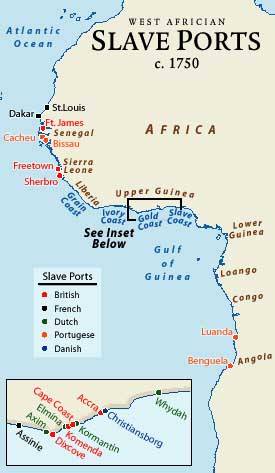
  • While reading an article on David Cameron’s visit to Africa, I just couldn’t help but see an image of British ships exploring the new world, landing on the African continent and thinking – “we’ve got free labor”.

    Source: Slavery in America

    The author follows Prime Minister Cameron on his trip to South Africa and Nigeria, highlighted by the fact that the Prime Minister brought with him the heads of several heavy hitters already doing business on the African continent – Vodacom, Barclays, and Diageo to name a few. Mr. Cameron’s theme throughout the trip was that Britain sees Africa in a new light – a trading partner, not just an aid recipient. Business leaders touted the economic opportunities on the continent, and expressed their wishlists of improved regulations to enable business to thrive.

    The African continent’s countries are really making moves in growing their economies and improving governance. Those improvements are drawing increasing attention from Asia and the West, and it is increasingly important that African countries protect their interests. My recent trip to Uganda revealed the downside of China’s investment on the continent – socks that had holes after a week of wear. Again, it is increasingly important that African countries protect their interests.

    Source: The Economist

    Those of us in the Diaspora have an incredible opportunity to seize in serving our countries. Tons of us have studied the way the Asian, European, and American players work the markets, run governments, etc. We can work with Africans on the continent in serving as gatekeepers to ensure that non-African penetration of African countries is healthy.

    Source: Marvel Comics

    I look forward to working with you in some fashion. I’m sitting here with goosebumps as I watch childhood daydreams morph into reality.

  • Why did there seem to be so many African health care professionals at DeKalb Medical Hospital? Over the course of my weeklong stay at the hospital, recovering from surgery, I could not help but ponder this. In the course of a week, nurses from Nigeria and Tanzania tended to me. My primary doctor was Nigerian. During my exercise walks down the hall, I saw even more African doctors, nurses, and technicians. I was floored.

    While in Uganda a few weeks ago, I heard stories about the challenges the country faces in retaining the medical doctors it trains. Imagine an entire district that has thousands of citizens, needs ten doctors to care for them, but has only been able to fill two positions. In Ghana, there were 0.85 physicians per 10,000 people in 2009. The country has around 23 million people, yet there were 2,000 doctors in 2009. According to the World Health Organization, African countries only have 3 percent of the global health workforce despite having 11 percent of the world’s population and 24 percent of the global disease burden: Global Health Workforce.

    The consensus among African doctors who leave the continent is that they left for higher salaries and better working conditions. The following video covers that tension well: Africa’s Deadly Brain Drain. Understanding a small piece of the challenge African countries are facing in growing their medical professional workforces increases my appreciation for some good friends of mine, and the work to which they have committed themselves in driving health improvements in African countries.

    Claud Crosby is a Tuberculosis Research Specialist at Emory University after living on the African continent for half a decade. He has spent a significant amount of time in Swaziland and South Africa working in medical facilities. Seeing the public health challenges in those countries drove him to re-enroll in college here in the US in efforts to pursue a medical degree. Claud’s ultimate aim is to practice medicine on the African continent. His vision is for public health systems that empower people to drive improved health conditions in their respective communities. He also aims to build profit-generating entities alongside these systems in order to reach individuals despite their ability to pay.

    Rivka Ihejirika is completing post-baccalaureate studies at Harvard University before enrolling in medical school. She set her mind to be a surgeon and contribute to the improvement of Nigeria’s healthcare system after a summer trip to the country. While there, she volunteered with a hospital and came back heavily impacted. Hopefully her leadership in surgery combats the challenges Patrick Awuah describes in the beginning of this talk: Training Our Next Leaders.

    Valentine Dike is an Army Officer in the US Army. His vision is to improve the sustainability of Nigeria’s health care infrastructure. He wants to see hospitals in which the power doesn’t go out in the middle of surgeries. Alongside conducting his duties in the Army, he is collaborating with a doctor in studying Nigeria’s health environment in depth. In studying Nigeria’s health care system, he has four areas in which he wants to grow his understanding:

    1. What are the Policies that are in place?
    2. What is the reality for the medical professionals on the ground?
    3. What are the conditions of the communities at hand
    4. What are the conditions of the primary care facilities?

    He aims to enroll in a Master of Public Policy/Master of Business Administration dual degree program in efforts to drive this vision from a policy and business perspective.

    While I am encouraged to see my friends going back to the African continent, its countries need their doctors, nurses, technicians, public health workers returning home. The challenges of compensation and working conditions are staggering in some countries, but more hands on the plow can push through them.

  • No. 16: Uganda – Farming Challenges in Kayongo

    Though back in the US, I am still in awe at how lush Uganda’s land is. I am also in awe to have seen so many children with malnutrition at the church I worshipped at on my last Sunday in the country. I and some friends travelled to a village called Kayongo that is located about 3-4 hours east of Kampala. One of my friends has a relationship with a pastor who lives in this community, and we spent a significant amount of time together over the course of our last week in the country.

    Agriculture is the primary source of income in the Kayongo area, and drought conditions during the past two years have had a significant impact on families’ abilities to feed themselves – let alone make some money. Imagine how I was trying to figure out how fast Kayongo can realize its piece of the continent’s $880 billion potential agricultural output?

    Seeing so much arable land, coupled with the reality of hunger that some of these families were facing left me stumped. The pastor in this community seems to have done a lot to identify potential resources that they can tap into to improve their farming practices. I believe the Uganda Clusters Program could really have an impact in this community, connecting subsistence farmers to fellow farmers who are effectively operating their farms as businesses.

    Seeing that community really put meat to the PowerPoints and white papers I have read on agriculture on the African continent. I look forward to learning more about driving agricultural growth on the continent among small-scale farmers.

  • I have been eager to update you on my first week in Uganda. The past week that I have spent in Uganda has been a tremendous time of soaking in observations of Uganda’s business and governance environment.

    My first meeting of the week was with Dr. Yasin Ziraba, Chairman of the National Steering Committee for the Innovation Systems and Cluster Programmes of Uganda (www.ugandaclusters.com). This is an incredible program that works to foster innovation, collaboration, and competition among small and medium enterprises (SMEs) in Uganda. If you are into collaboration, this is a program to watch out for. I cannot wait to connect you with this program when I get back to Atlanta.

    Dr. Yasin Ziraba commenting during an ICT facilitator training session for the Uganda Clusters Program

    We discussed how this program brings together enterprises operating in the same sector and forms them into clusters according to their geographic location. Some examples of the successes clusters have had through this program include the following:

    -The Management Consulting cluster securing a contract with Emirates Airline to hire 300 personnel for the airlines operation in Uganda.
    -The Katwe Metal Fabrication cluster building an entire car from scratch.
    -The ICT cluster developing a system that utilizes SMS messaging to determine Uganda’s national milk supply

    Uganda has a burgeoning film industry, and I met with the Director of Uganda’s Investment Authority and the Program Director of Maisha Film Labs in efforts to gain a better grasp of Uganda’s film space.

    Maisha Film Labs trains filmmakers through laboratory training sessions in partnership with the likes of Columbia University, Goteburg Film Fund, and the Danish Film Festival. After the labs, filmmakers produce four short films, some of which have appeared in renowned film festivals. Oscar-nominated director Mira Nair founded the organization in 2004, and it hasn’t looked back since.

    The Ugandan government is establishing the environment for filmmakers to be successful through the creation of intellectual property laws, and the capacity building of officials responsible for enforcing such laws.

    Yesterday, I and three friends had a terrific dinner with Derreck Kayongo’s parents. Derreck works at Care International and is Chariman of the Global Soap Project (www.globalsoap.org), an Atlanta-based organization that reprocesses used soap from US hotels. His father told us how Derreck, at a young age, would watch him make soap. A lot of people are grateful that he was paying attention.

    I have stayed with a most gracious family, the Kajjubis, who has given me an eye into people living at the bottom of the economic pyramid. They lead a church in a struggling suburb of Kampala, Uganda’s capital city. They have a vision to impact the lives of the community spiritually and economically. I have learned so much from this family in the past week. We have had incredible fellowship every day – praying, building business plans, playing soccer with the local boys. I am most grateful to my friend for inviting me to join him in visiting close friends.

    Today, we leave for Bugiri, a rural city east of Kampala. Agriculture is one of Uganda’s leading economic opportunity areas, and I am eager to spend time with farmers working the land in that part of the country. I will be back in Kampala next Wednesday, and I look forward to updating you at the end of next week.

  • I left a 10-day vacation in Switzerland last month in awe of the country’s rail infrastructure. One can live in a small village hours away from a major city like Zurich or Geneva, yet work in the city without a car. This would be tough to do in Atlanta.

    In Switzerland, trams are an indispensable ingredient of a convenient commute. Street-level light rail in Geneva enabled me to easily jump on a train and get off when I saw my stop. I watched hundreds of people do the same during a day trip to Zurich.

    Traveling regionally, I took express trains that didn’t stop on the way to our destination, making for very efficient trips. My wife and I only had one late train on our entire trip. I took several naps in my clean, cushioned seat during one-and-a-half-hour train rides from the Alps to Zurich. I awakened to at least one nightmare upon realizing that I spend the same amount of time driving from Decatur to the University of Georgia in Athens twice a week.

    Returning home, I couldn’t help but think about how metro Atlanta could benefit from Zurich’s expertise in establishing a tram network that encourages commuters to use rail within the city.

    Rapid transit has been a major discussion point in metro Atlanta due to the city’s stifling car traffic and the lack of access to the Metro Atlanta Rapid Transit Authority’s (MARTA) rail lines in certain areas.

    A series of projects in the pipeline could combat these challenges. The Atlanta Beltline includes a 22-mile rail line that will connect the majority of Atlanta’s neighborhoods. And last year, the City of Atlanta won a $47.6 million federal grant to construct a streetcar connecting King Memorial and Centennial Olympic Park. Atlanta won this funding after falling short in securing nearly $300 million in funding for a streetcar that would run along the Peachtree Street corridor between Downtown and Midtown.

    In researching these efforts, I learned that Atlanta officials have already engaged Swiss leaders to learn more about the country’s transit model and its lessons for Atlanta.
    Councilman Kwanza Hall traveled to Switzerland to participate in an intensive study of the country’s transit system. Atlanta’s Swiss consulate general also has hosted multiple sustainable transportation conferences at the Georgia Institute of Technology.

    One of Atlanta’s African sister cities would do well to join Atlanta in learning from Zurich’s experience. Lagos, Nigeria, with its 15 million people, is the country’s most populous city and the second most populous city on the African continent. Its government has committed 70 billion naira (about $452 million) to install a light rail system that would improve the ability of Nigerians to move within a city projected to be Africa’s largest by 2015, according to a United Nations HABITAT report. By establishing links with Zurich’s Public Transport Authority (ZVV), Lagos could ensure that it reduces car traffic as much as possible.

    The completion of the Lagos light rail project could also increase the ease of travel between Atlanta and Lagos, which are already linked by a nonstop Delta Air Lines flight. The light rail line will connect Murtala Muhammed Airport to the rest of Lagos, enabling foreign businesspeople to more easily travel throughout the city. This convenient change would be a small but significant contribution to the growth of business engagement between Lagos and Atlanta.

    Zurich provides a light-rail model for Lagos and Atlanta, one from which I hope they partner in learning. It would be great to see Lagos and Atlanta residents and visitors utilizing their rail lines as admirably as Switzerland, for the long-term benefit of both cities.

  • Business people from African countries and Switzerland will gather for the Fourth Swiss-African Business Exchange in Geneva this week to dig in and find ways to do business with one another. Exchange sessions will cover several topics including manufacturing, East African trade and investment opportunities and renewable energy.

    The following manufacturers will make up part of the manufacturing panel and are sure to provide a solid on-the-ground perspective of manufacturing in African countries:

    -Gary Hannam, Olivado Limited – avocado oil plant in Kenya
    -Hans Peter Werder, HPW AG – dried fruit factory in Ghana
    -Ramadhan Madabida, Tanzani Pharmaceutical Industries – pharmaceutical plant in Tanzania

    Tony Hawkins, a professor at the University of Zimbabwe, painted a dreary picture of African manufacturing prospects. According to his assessment, South Africa generates 60 percent of the industrial output on the African continent. In the continent’s de-industrialization, Africa cannot compete with Asia which is producing high-tech products for the global market compared to the localized low-tech products African manufacturers are producing, according to Mr. Hawkins. Combatting this analysis are manufacturers like Nigeria’s Dangote Group which is successfully manufacturing rice, cement, flour, and other commodities for African countries. Dangote Cement’s initials will soon be scrolling across the London Stock Exchange.

    Trade and investment opportunities in East Africa will be a topic covered by the following:

    -H.E. Menilik Alemu – Ethiopian Ambassador to Switzerland
    -H.E. Jacques Pitteloud – Swiss Ambassador to Kenya, Rwanda, Burundi, Uganda, Somalia, and the Seychelles.
    -Professor Maggie Kigozie, Executive Director, Uganda Investment Authority
    -John Gara, Rwanda Development Board

    As Kenya, Rwanda, Uganda, and the Seychelles continue their rapid growth, Switzerland will need to invest in establishing embassies solely focused on each of these countries. Between 2001 and 2010, Rwanda was one of the ten fastest growing countries in the world. Ethiopia was one of the six African countries on that list and is projected to retain that spot for the next five years. For Switzerland to maximize business relationships with these countries, a focused presence in each will be essential to success. One ambassador is not able to develop the deep relationships and knowledge of these very different countries, in efforts to support all types of relations with Switzerland.

    Executives in the renewable energy sector include:

    -Felix Obada – Managing Director/CEO, Global Biofuels Limited, Nigeria
    -Jorgen Sandstrom – Deputy Managing Director, Addax Bioenergy Management SA, Sierra Leone

    On his visit to Atlanta, Kenyan Ambassador to the United States Elkanah Odembo discussed the effort Kenya is making to be primarily reliant on renewable energies like solar power and geothermal energy by 2030. The African continent has a lot of sunlight and strong rivers among other resources. The opportunities to harness that energy responsibly will make for a great discussion.

    The exchange line up is sure to make for stimulating discussion and the initiation of business deals that will contribute to the economic growth of African countries. Click on the following link for more information on the Swiss-African Business Exchange:

  • While receiving an award for Excellence in Commercial Diplomacy at Howard University’s Africa Business Conference, Florizelle Liser, Assistant US Trade Representative for Africa expressed her desire to see entrepreneurs in the African-American community and in African countries seek out partnerships with each other. The city of Atlanta, Georgia has a mix of key ingredients to make this happen:

    1. According to 2010 U.S. Census data, Atlanta has the second largest number of black-owned businesses in the United States. One cannot help but notice the entrepreneurial spirit within the black community, with individuals operating in industries ranging from dry-cleaning to management consulting.

    2. Through Atlanta’s Hartsfield-Jackson Airport, Delta launches direct flights to Accra, Johannesburg, Monrovia, Abuja, Lagos, and Cairo. One can fly to Accra in a time not much longer than it takes to fly to Los Angeles.

    3. Mayor Kasim Reed has a vision for Atlanta to be the Western Hemisphere’s logistics hub – an aspiration that will contribute to the growing impact of the African Growth and Opportunities Act on trade between the US and African countries.

    4. Georgia Tech University develops numerous engineers whose skills could contribute to Africa closing its $93 billion gap in infrastructure development.

    5. Though not in Atlanta, the University of Georgia develops a talented pool of students in the agricultural industry who could contribute to Africa reaching $880 billion in agricultural output by 2040.

    Dr. Adetunji Adegbesan, a strategy professor at Lagos Business School, shared an incredible story that crystalizes the potential of entrepreneurship on the African continent. An MTN executive monitoring data usage on the company’s Nigeria network noticed that a significant amount of data was passing through the network, but someone was not paying for that usage. After alerting the company’s network engineers, MTN blocked the source of that usage. A few weeks later, the same executive noticed more data passing through that was not accounted for financially. He again approached network engineers who blocked the source. Yet again, data was passing through after a few weeks and the executive approached engineers in Europe who established an elaborate block that was sure to keep the data from passing through. Data was passing through the block a few months later.

    Who was breaking through MTN’s network? The company tracked the source of the data and located a small college city where a group of graduates helped families set up their computers. As part of the package they offered, these entrepreneurs “installed” the internet on these computers. They figured out a way to log the computers into MTN’s internal network while keeping the computers’ identities masked. The end result – MTN hired these innovators.

    Entrepreneurship is essential to economic growth on the African continent and in the US. One can be sure that the vibrancy found in that small college city in Nigeria is not isolated, and US entrepreneurs would do well to engage this movement. Atlanta-based entrepreneurs should take the lead in engaging fellow entrepreneurs in African countries.

  • At what cost will Africa realize the economic potential of its agricultural industry? According to McKinsey & Company, about 60 percent of the world’s uncultivated arable land is on the African continent. A few months ago, NPR did a piece on how Brazil has leveraged science to establish the country as a breadbasket. While listening to the piece, I thought about the model Brazil presents for African countries. Initially excited, I then thought about the potential costs of producing genetically manufactured (GM) foods.

    Embrapa, Brazil’s government-run agricultural research institute, has done significant research to find ways for various types of crops to grow in the country since the 1970s. This research has led to enormous economic output. According to the Economist, Brazil drove the value of its crops from $23 billion in 1996 to $108 billion in 2006. Furthermore, the country is only using 12.5 percent of its 400 million hectares of uncultivated arable land. The Economist article qualifies these figures with the caution that Brazil drove agricultural growth systematically, and that growth on the African continent will not come quickly. Brazil spent years improving its soil, in concert with seed development. These developments led to new farming techniques that have enabled farmers to significantly increase their yields.

    One can imagine the implications of Brazil’s agricultural growth for the African continent. McKinsey and Company projects that by 2040, African countries can increase the collective value of their agricultural output from $280 billion to $880 billion. To do this, countries will have to bring more land into cultivation, increase crop yields, and replace low-value crops with high-value crops like fruits and vegetables. Furthermore, if African countries are not able to implement these key drivers faster than Brazil has, 2040 will not be the year that the continent realizes $880 billion in agricultural output. The celerity with which African countries have driven the boom of the mobile phone industry makes me hopeful that it will be able to implement agricultural growth at a faster pace.

    My tension lies in Brazil being second only to the United States in utilization of GM crops. Proponents of GM foods point to the necessity of these crops in establishing food security and production levels for generations to come. Critics argue against GM crops due to their potential danger to humans, and the threat they pose to other plants. A number of African countries are already producing GM crops, and scientists in Brazil continue to develop new plant technologies and farming techniques. Scientists, farmers, and policy makers are going to have to commit to thoroughly vetting the costs and benefits of employing GM crops in pursuit of a robust agricultural industry on the African continent. The economic potential of agriculture on the continent is quite impressive and will be an obstacle to objective cost-benefit analysis of policy options. Decision makers must champion thorough research and holistic conversations in shaping the premise on which countries drive agricultural development efforts. Without this hard analysis, the realization of Africa’s agricultural potential could come at a significant cost to the continent’s one-billion people.

  • None of the three options are sustainabl­e for the continent and I align with your critiques. A consistent stance on governance is the best policy move for the internatio­nal community to take in engaging African countries. For example, the World Justice Project is working to bring a consistent definition to the rule of law around the world. The index applies the same metrics to Liberia as it does to the US. That is very powerful, and I believe that policy shapers leveraging uniform standards to shape their engagement with countries goes a long way in applying pressure for good governance­. On that foundation­, the internatio­nal community can say to a Gbagbo, “I just submitted myself to the same process you went through. I lost and we know that you did too. Step down.”
    Read the Article at HuffingtonPost

  • Things are not looking good in Cote d’Ivoire. “We do not need the international community.” The desire for power is crippling. http://ping.fm/bd58x

  • No. 7: Xiang Liu is Back?

    13.09 – A long cry from the 12.88 Liu Xiang ran to set the world record back in 2006, but I am happy to see him getting back into form: Since his achilles injury Liu has absorbed a lot of disappointment from the Chinese people beginning in the 2007 season when he started showing signs of injury. Infamously, he walked off of the track in the 110 hurdle prelims during the Beijing Olympics.

    The hurdle void Liu left was quickly filled by Dayron Robles, a kid from Cuba. In 2008, he lowered Liu’s world record to 12.87 and went on to win the Beijing Olympics in 12.93. When Robles injured himself in 2009, David Oliver took over and finished this past season undefeated. By the way, Oliver makes Minnesota Viking running back Adrian Peterson look like a normal person.

    Now that Liu seems to be on his way back to good form, I’m interested to see how the 2011 season shapes up. Hopefully, Dayron Robles is healthy also, and the three fastest men in hurdle history get to battle it out.

  • South African Ambassador to the US, Ebrahim Rasool, gave a great speech to an audience in honor of Helen Suzman, one of the most persistent white supporters of the anti-apartheid movement in South Africa.

    Thanks to Global Atlanta for the footage.

  • These GDP growth figures look quite impressive. It would be great to obtain photography that tracks with the release of such figures. Imagine seeing pictures that crystallize African countries’ improvements, small as they may be.

    Sub-Saharan Africa’s GDP | The Economist. … Read More

    via Investing In Africa – Mutual Fund

  • I appreciate my sister, Chenae, asking me whether the World Cup will really help South Africa’s economy. My response to her question follows:

    I worry about South Africa’s ability to maintain these huge stadiums it has built. They could drain resources. 50,000 people aren’t going to watch professional games on a regular basis. Another concern is that many of the jobs the World Cup has generated are temporary. While these temporary jobs help, South Africa needs a whole lot more permanent jobs to bring it’s unemployment rate down from 25 percent.

    There is a lot of upside to the World Cup. South Africa is already Africa’s biggest economy, and the World Cup further bolsters its visibility. Venture capitalists and the like will be encouraged to restart the investment that raised Africa’s economic growth to 6 percent. South Africa could lead the way for renewed investments on the continent.

    South Africa needs to be really aggressive about selling itself to foreign investors. It needs to prepare its people to leverage foreign investments in the country. A typical side effect of events like the Olympics and World Cup is a large group of displaced people. South Africa needs to push hard to make these people whole in any way possible: education, job training, etc. This is really important because the country has been experiencing a lot of xenophobia in the past year. A lot of immigrants have died in the past year, due to riots in which native South Africans have released their anger over job competition with immigrants.

    I think that if South Africa can leverage the World Cup to attract foreign investment and to engage the lower class — native and immigrant, the country can see steady economic growth, and finally move firmly into classification as a developed country.

  • So, I’m looking through the splits of the men’s 4x400m relay at the NCAA East Regional meet, and I see, “43.94 FR Kirani James.” To provide more context: A 17-year old freshman at the University of Alabama ran a lap around the track in 43.94 seconds!  That’s the type of performance that keeps me perusing track results looking for the next track and field star. This guy is from Grenada. He won the 400m dash at the World Youth Championships last year in a time of 45.24.  That’s .01 secs. faster than what Lashawn Merritt ran when he won the World Junior Championships back in 2004.  Lashawn went on to win the 400m at the Beijing Olympics a full second ahead of the second place athlete – Jeremy Wariner, another athlete who stamped his mark as a star at a very young age. His sophomore year at Baylor University, Jeremy won the 400m dash at both the NCAA indoor and outdoor championships, the US Championships, and the Athens Olympics.

    I owe you an apology for taking so long to update the blog.  Life had been really busy leading up to my wedding on May 1.  My wife and I are settling well into married life. I’m really grateful to have her as my teammate.  She’s been gently nudging me to honor my commitment to maintain this blog.  The amazing performances athletes have posted have also nudged me to keep my readers up-to-date on what is going on in the world of track and field.  Late in the spring, 20-year old Teddy Tamgho broke the indoor world record in the triple jump. Today, Chaunte Lowe set the American record in the high jump. University of Oregon senior Ashton Eaton set the indoor world record in the decathlon.  This has been a happening year in athletics!

    My favorite performance to date is Tyson Gay breaking a record held by an icon in both the athletics world and Civil Rights Movement.   Tommie Smith is best known for raising his gloved right fist into the air after winning the 200m dash at the 1968 Mexico City Olympic Games.  A few weeks ago, Tyson Gay ran 19.41 in the straightline 200m dash. Back in 1966, Tommie Smith ran the straightline 200m dash in 19.5 secs a world record.  Since this event is no longer in official competition, Tommie Smith still holds the official record.  Notice the speed suit Tyson is wearing.  The suit Jesse Owens wore when he mastered the 1936 Berlin Olympics is the inspiration for this design.

    Tyson Gay is in great form, and will continue to run some amazing times as the summer progresses.  He left me wide-eyed with his 44.89 in the 400m dash at a meet back in April: http://www.youtube.com/watch?v=os2Q0QSAqNM.  He is the first athlete to run under all three significant time barriers: 10 secs in the 100m dash, 20 secs in the 200m dash, and now 45 secs in the 400m dash.  Moreover his 9.69 sec 100m and 19.58 sec 200m make him the second fastest human ever in each of those events.  I believe he is in better shape than Usain Bolt at the moment, and may threaten Bolt’s current dominance of the 100m and 200m dash. Look forward to my updates.

  • In elementary school, I grew ashamed of the African heritage that sprung from my father’s Ghanaian homeland.  Every day seemed to bring with it a new snide remark from fellow classmates.  Either, I lifted rocks for exercise, had too big of a nose, or was an “African booty scratcher.”  As I absorbed these remarks with smiles and giggles, I came to despise my heritage more each day.  All the while, my father shared story after story of Ghanaian heroes such as Jerry John Rawlings who overthrew two corrupt governments before solidifying Ghana as a democratic state.  Why couldn’t I muster up even a little of Rawlings’s courage to stand up for my own heritage?  Instead, I did everything I could to fit in.  I pulled down my pants as soon as I boarded the school bus.  I tried to pierce my ear.  I incorporated as many curses as possible into my vocabulary.  My nickname during those years embodies my efforts to reverse my heritage.  I went by Emawk–Kwame spelled backwards.

    I continued to suppress my heritage throughout middle school, but as a freshman away at boarding school, I finally began to embrace the very culture I had tried so hard to reject.  Surrounded by boys from privileged backgrounds and WASP society, I spent hours in the weight room, on the basketball court, and on the track trying to harness my physical prowess in order to prove I belonged.  Thankfully, my teachers took a sincere interest in my cultural roots, and it was through their eyes that I began to see my own heritage anew.  Conversations with my teachers challenged me to engage my heritage and read about these heroes my father had spoken of during my youth.  Kwame Nkrumah’s passion for uniting the countries of Africa sparked my interest in the African Union and its goal of creating a United States of Africa.  J.J. Rawlings’ pursuit of justice in overthrowing corrupt governments in Ghana led me to investigate corruption levels within his own administrations.

    In college, coursework studying African politics, American foreign policy, and African cultural continuum in the United States helped answer some questions and guide me in framing more.  Follow-up on past research confirmed that African émigrés to the United States needed to be more involved in US foreign policy concerning Africa.  Work with African-American elementary school-age students convinced me of the need for a connection between African-American youth and their peers on the African continent.

    Now, I find myself in graduate school studying Public Administration as I bring more shape to my ideas regarding African émigré involvement in US foreign policy and connecting African and African-American youth.  My postings will let you in on the development of these ideas.  I will look at a wide range of issues, including the following: private equity investments, incursions by Chinese companies, political elections, governance, US foreign policy, and the development of African and African-American youth.  Feel free to comment on my posts.  I want this to be an interactive process as I plan to learn an incredible amount in this process, and pray that you do as well.

  • No.1: Speed It Is I Love

    My first track meet ever, I lined up for the 100m dash next to a guy wearing Air Force 1s, jean shorts, and an NFL jersey.  All eight of us in the race had no idea how to get into the right stance, and were jumping around trying to get a jump on the starter’s gun.  When the gun did go off, my man in the Air Forces did not waste any time getting to the finish line.  While I was not the fastest guy, I had so much fun—just running. 

    After winning the county championship in the 200m dash in the eighth grade, I had the opportunity to run with a track club during the summer.  Humility is something I learned quickly as I ran against the likes of Michael Grant, one of the fastest 13-year olds in the country.  I also learned what it was to have good form, and to develop my own by studying other athletes.  In high school I became a perfectionist, studying video after video of athletes like Justin Gatlin, Dwain Chambers, Aziz Zakari, and Maurice Greene.  I dreamed of dominance while watching Jesse Owens run and Bob Beamon jump.  I scoured professional athlete progressions on http://www.iaaf.org.  I began following other high school athletes on Dyestat and Milestat.  I raved about Kelly Willie and Jeremy Wariner facing off at the 2002 Golden West Invitational, both running sub-46 in the 400m dash.  Brendan Christian ran 10.20 in the same meet!  I wanted that kind of speed.

    I was fortunate that my football coaches in college allowed me to continue running track.  Both sports taught me extremely valuable lessons.  I developed a mental toughness on the track that enabled me to push through a sophomore season in which I fouled out of meets for both the indoor and outdoor seasons in the triple jump, until I set a huge personal record in the Southern Conference Championship.  I developed a physical toughness on the football field that created a craving for contact. 

    My obsession with track and field statistics bordered ridiculous.  After track meets, I would spend hours studying results from meets across the country.  I kept a mental log of the progression of a number of athletes and offered my predictions for the NCAA Championships, US Championships, and World Championships whenever anyone showed interest.  I am itching for the indoor track and field season to begin.  I did spend some time this fall expanding my knowledge of cross country running and road racing.  Look forward to comprehensive commentary on track and field at the high school, collegiate, and professional levels.